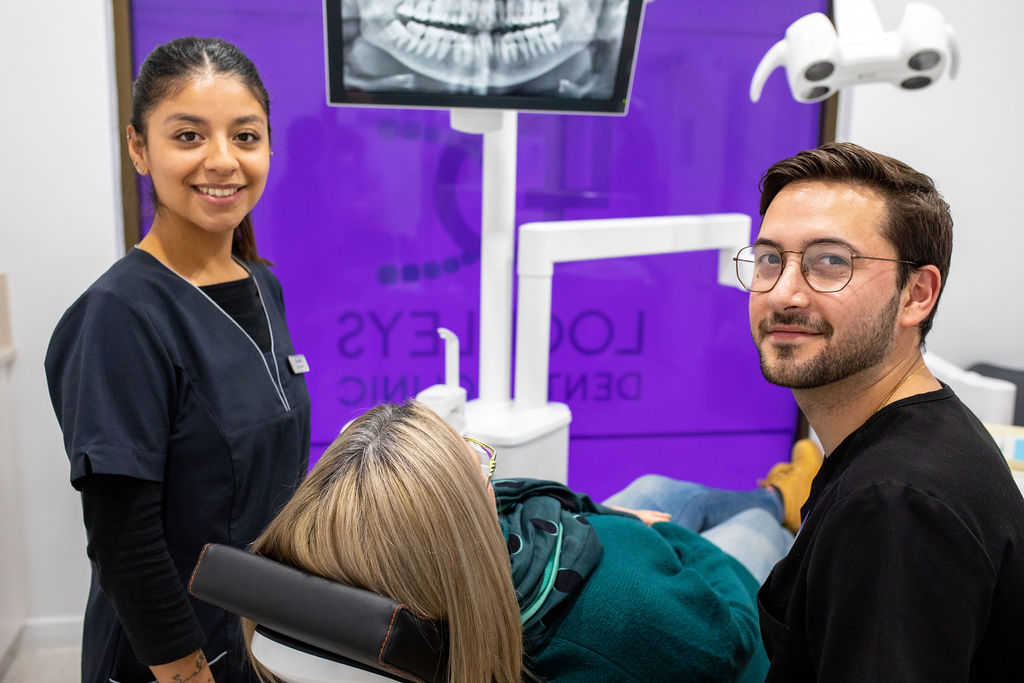
Surgical wisdom tooth removal at Lockleys Dental Clinic. Dr Alex Furlan performs complex extractions in-house. IV sedation available at an external facility. Book a consultation.
Dr Alex Furlan Surgical extractions in-house
Sedation options IV sedation at external facility
OPG X-ray Accurate surgical planning
No hospital required Complex cases done in-chair
Wisdom teeth removed without the hospital wait
Wisdom teeth (the third molars at the back of the mouth) often cause problems as they emerge. Whether they're impacted, only partially erupted, or growing at an angle, removal is frequently recommended to prevent pain, infection, and damage to adjacent teeth.
At Lockleys Dental Clinic, Dr Alex Furlan performs surgical wisdom tooth extractions in-house, including complex impacted cases that many general practices refer to hospital. For patients who require IV sedation or general anaesthesia, these are available at an external facility, helping you avoid lengthy public hospital waiting lists.
Why wisdom teeth cause problems
Most people's jaws don't have enough room for wisdom teeth to emerge properly. When they can't fully break through the gum, a condition called impaction, several issues can follow:
Persistent pain and swelling at the back of the mouth
Infection of the gum flap over a partially erupted tooth (pericoronitis)
Decay in the wisdom tooth or the tooth in front of it
Damage to adjacent teeth from pressure or abnormal positioning
Cyst formation around an impacted tooth
Not every wisdom tooth needs to be removed. Some erupt without issue. We'll assess your X-rays and clinical picture carefully before making any recommendation.
Simple vs surgical extraction
Simple extraction
When a wisdom tooth has fully erupted and has a straightforward root shape, it can often be removed with a simple extraction under local anaesthetic, the same as having any other tooth taken out. The procedure is typically quick and well-tolerated.
Surgical extraction
Impacted wisdom teeth (those still beneath the gum, partially erupted, or angled sideways) require a surgical approach. Dr Alex Furlan makes a small incision in the gum, removes any bone obstructing the tooth, and extracts it, sometimes in sections if necessary. Surgical extractions are what typically get referred to hospital in a general dental setting; we perform these in-house.
Sedation options for wisdom tooth removal
Wisdom tooth surgery, particularly surgical extractions, can feel daunting. We offer three levels of sedation to suit your needs:
Local anaesthetic only: numbs the area completely. You remain awake but should feel no pain
Nitrous oxide (happy gas): inhaled through a mask, induces relaxation and reduces anxiety while you stay conscious and responsive
IV sedation: available at an external facility. Puts you in a deeply relaxed, semi-conscious state with little or no memory of the procedure
General anaesthesia: available at an external facility for complex cases or patients who require full unconscious sedation
The right sedation level depends on the complexity of the extraction, your anxiety level, and your medical history. We'll discuss all of this at your consultation and help you make the right choice.
Recovery after wisdom tooth removal
Bite firmly on gauze for 30 to 60 minutes after the procedure to help clotting
Take pain relief as prescribed. Most discomfort peaks in the first 48 to 72 hours
Stick to soft foods for the first few days: soup, yoghurt, scrambled eggs
Avoid smoking, straws, and vigorous rinsing for at least 24 hours (risk of dry socket)
Gentle salt water rinses from day 2 can help keep the area clean
If sedated, arrange a responsible adult to drive you home and stay with you for a few hours
Most people return to normal activities within a few days. Swelling typically peaks around day 2 to 3 and gradually improves. Full healing of the socket takes several weeks, though you'll feel comfortable much sooner than that.
Frequently asked questions
No. Wisdom teeth that have fully erupted in a good position, can be cleaned properly, and aren't causing any problems may not need removal. We'll take an OPG (panoramic X-ray) to assess the position of all four wisdom teeth and advise on which, if any, require removal. We don't recommend extraction unless there's a clinical reason to do so.
A simple extraction can take as little as 15 to 30 minutes. A surgical extraction of a fully impacted wisdom tooth may take 45 to 60 minutes or more, depending on the root anatomy and the degree of impaction. If multiple teeth are being removed at once, additional time is needed. Dr Alex Furlan will give you a realistic estimate based on your X-rays.
Yes, and it's often preferable, as it means one recovery period instead of four. Having all four removed in one session under IV sedation or GA is a common approach. We'll assess whether this is appropriate for you based on the complexity of each extraction and your overall health.
Dry socket (alveolar osteitis) occurs when the blood clot that forms in the extraction socket is dislodged or dissolves prematurely, exposing the underlying bone. It causes a dull, aching pain that typically starts 2 to 4 days after surgery. To reduce the risk: avoid smoking, using straws, or vigorous rinsing for at least 24 hours after surgery. If you suspect dry socket, contact us. It's easily treated with a medicated dressing.
Ready when you are
Ready to book your visit?
Whether it's a routine check-up or something more complex, our team is here to help. Call us or drop in. We're on Henley Beach Road.